.png)
Starting Horse Riding at 35: Making Room for a Long-Held Dream
Starting Horse Riding at 35: Making Room for a Long-Held Dream
I started riding at 35, after wanting to do it for a long time, which is one of the reasons I care so much about making Saddle Stories welcoming to adults who arrive without a childhood spent around horses. Travel had already been a constant in my life, and organizing trips for friends was something I loved, so bringing that enthusiasm together with horses and time in nature eventually gave the idea a direction.
That is the personal starting point for this article, rather than a claim that everyone should learn the way I did or want the same things from it. Your first step might be a regular lesson near home, an introduction on vacation or simply asking a riding school a question you have been putting off for years.
There is a particular kind of intimidation that comes with walking into a riding stable for the first time as an adult, because horse riding has a way of looking like a world everyone else entered before you did, full of children who seem to have been able to tack up a pony since approximately the moment they could walk, teenagers casually discussing leads and diagonals, and adults who answer the question “How long have you been riding?” with something terrifyingly casual like, “Oh, since I was four.”
Perhaps you wanted to ride as a child but lessons were too expensive, perhaps there were no horses anywhere near you, perhaps your parents were simply not interested, or perhaps life moved in another direction and horses disappeared from your thoughts for twenty years until, for no particularly sensible reason, you found yourself watching videos of people galloping across Iceland and wondering whether you had somehow missed your chance.
Starting horse riding at 30, 40, 50 or beyond can therefore feel less like beginning a new hobby and more like arriving halfway through a film in which everybody else already knows the characters, the language and what is supposed to happen next.
But perhaps you have not arrived late at all, and what feels like a delayed beginning is simply the right time for you.
Are you too old to start horse riding?
No, there is no age by which you are supposed to have learned how to ride a horse, and while competitive ambitions, physical condition and individual circumstances obviously vary, recreational horse riding is absolutely something adults can begin later in life.
The equestrian world is also considerably more age-diverse than the familiar image of the pony-obsessed eight-year-old might suggest, and research across different rider populations shows that people continue to ride well into later adulthood, often valuing the physical, social and psychological benefits very highly.
A 2020 survey of 2,651 riders, published as “Perceived Benefits for Mental and Physical Health and Barriers to Horseback Riding Participation,” examined what participants felt riding offered them and what made taking part difficult. Older respondents reported stronger perceived benefits on some measures, although a survey of existing riders cannot tell a new rider what their own experience or health outcomes will be.
In some respects, the opposite may be true.
Why are more adults discovering horse riding later in life?
There is no single neat statistic that tells us exactly how many people are taking their first riding lesson at 35 instead of eight, and claims that adult beginners are suddenly the “fastest-growing demographic” should be treated carefully unless they are backed by reliable data.
What we do know, however, is that equestrian participation remains significant, women make up a large share of the riding population, and horse riding is increasingly understood not only as a competitive sport but also as recreation, physical activity, time outdoors, travel, connection with animals and a contributor to wellbeing.
For a long time, the most visible route into horses looked fairly traditional: start lessons as a child, join a pony club, progress through riding levels, perhaps compete, eventually lease or own a horse, and build your entire identity in and around that world.
Adult riders do not necessarily want that trajectory at all, because for many of them the goal is not competition or ownership but simply having a weekly lesson after work, building enough confidence to canter across a beach one day, returning to horses after twenty years away, discovering riding through travel rather than through a traditional riding school, or finally making room for something they wanted when they were younger but never had the time, independence or money to pursue.
There is also, perhaps, a broader cultural shift happening around hobbies in adulthood, because more people are beginning to question the idea that something only counts if you started young enough to become exceptional at it. Something can deserve a place in your life simply because you enjoy it, whether or not you ever become especially good at it.
The advantages of learning to ride as an adult
Starting later does come with some obvious challenges, because adults tend to be more aware of risk than children, falling hurts more than it did when you were ten, and fitting lessons around work, family, travel and everything else that adulthood tends to accumulate can be difficult.
But adults also arrive with things a child simply has not had time to develop yet, and those qualities can make learning to ride later in life surprisingly rewarding.
You are choosing it for yourself
Nobody has signed you up for Saturday morning riding lessons, nobody is expecting you to collect ribbons, and you are not there because your parents decided you needed an extracurricular activity or because your friends were doing it.
You are there because you want to be, and that matters more than it sounds, because intrinsic motivation can completely change the experience of learning and give you the freedom to decide what you actually want from horses, whether that means improving technically, spending more time outdoors, learning to jump, eventually traveling on horseback, building confidence or simply creating one part of your week that belongs entirely to you.
You do not have to turn riding into another achievement
Adulthood has a remarkable ability to make everything productive, so we exercise to become fitter, read to become better informed, network to advance our careers, track our sleep, measure our steps and occasionally seem determined to turn even our leisure time into another self-improvement project.
Horse riding does not have to become one more thing to optimize, because becoming better can be satisfying without an expectation that you will compete, own a horse or execute a perfect flying change. There is a certain freedom in learning something you have absolutely no obligation to master.
You know yourself better
An adult beginner may know very little about riding, but they are not a beginner at life, which means they are often better able to understand how they learn, when they need something explained twice, what kind of teacher brings out the best in them, when they are genuinely frightened rather than simply nervous, and when something does not feel right.
That self-awareness can be extremely useful around horses, because good riding requires patience, communication, emotional regulation and an ability to pay attention to another living being rather than simply forcing an outcome, none of which is reserved for people who learned rising trot before they learned long division.
Riding gives you something increasingly rare: your complete attention
A horse is rather indifferent to your inbox, which means you cannot scroll through Instagram while learning to canter, answer messages while navigating a trail or spend an entire lesson mentally composing tomorrow’s to-do list without eventually discovering that the 500-kilogram animal underneath you has opinions of its own.
Horse riding has a way of pulling your attention back into the present, because your balance, your body, your horse and what is happening around you all require enough awareness that the rest of life becomes temporarily less important.
Research into horseback riding has identified perceived benefits relating to psychosocial wellbeing, relaxation, social contact and physical performance, and for people whose normal lives involve screens, deadlines and a constant low-level demand for attention, that hour in which almost everything else disappears can feel surprisingly luxurious.
If this is part of what draws you to horses, you can read more about why horses can have such a calming effect on the human nervous system.
Horse riding is genuine physical activity
A horse may be doing the walking, but that does not mean the rider is simply sitting there, because riding requires balance, coordination, postural control and muscular engagement, particularly through the core and lower body.
Research has associated recreational horseback riding with physical as well as mental wellbeing, and studies in older adults have found riders to report high levels of physical activity and wellbeing compared with some non-riding groups.
That does not mean you need to arrive at your first lesson exceptionally fit, and in fact riding itself can become one of the ways you enjoy moving your body rather than something you have to get fit enough to “earn.” If the physical side is something you are worried about before starting, our guide to how fit you need to be for horse riding explains what riding actually demands from your body and what beginners can realistically expect.
Why starting horse riding as an adult can feel intimidating
Knowing intellectually that adults can learn to ride does not necessarily make entering a stable for the first time comfortable, because one of the biggest barriers is simply feeling as though you should already know things that, as a beginner, you obviously cannot be expected to know.
What do I wear, how do I approach the horse, am I holding this correctly, what does the instructor mean by “inside leg,” is everyone looking at me, and why can that nine-year-old do this effortlessly while I appear to have temporarily lost control of all four limbs?
A good riding school should expect beginners not to know these things, because helping you learn them is part of the reason you are there.
Research into participation barriers in horseback riding has identified time commitment, physical effort, access to facilities and family-related constraints among the obstacles riders can experience, while cost and accessibility can also be very real practical barriers, particularly as riding schools themselves deal with increasingly high operating costs.
The answer is not pretending those barriers do not exist, but finding a way of riding that fits the life you actually have.
How to start horse riding as an adult
You do not need to buy a complete riding wardrobe, expensive boots and seventeen pieces of equipment before you have even touched a horse, and for most adult beginners the best first step is simply finding a reputable riding school that explicitly teaches adults and is comfortable working with people who are starting from zero.
Tell them honestly that you are a complete beginner, ask whether they offer private lessons if joining a group feels intimidating, find out what equipment they provide and what they recommend you wear, and ask in advance whether there are any weight, mobility or other participation requirements you should know about before booking.
If you would rather know what to expect before you ever walk into a stable, start with our complete beginner’s guide to horseback riding, which takes you through the basics without assuming you already speak fluent horse.
Your first lessons should focus on the fundamentals, including approaching and handling horses safely, mounting and dismounting, developing a balanced position, learning basic aids and gradually becoming comfortable at walk and trot before progressing further.
There is no prize for reaching canter first, and confidence around horses is built through repetition rather than speed, so a good instructor should progress at a pace that suits both the rider and the horse.
While lessons and time around horses remain the foundation of learning, our Riding Knowledge Quiz offers a gentle way to explore the everyday knowledge that can make those first conversations at the stable feel a little more familiar.
For a more practical companion to the first conversations with a school, our First Ride Library resources include material to help you organize questions and preparation, without turning a worksheet or a quiz into a measure of riding ability.
What should you wear for your first riding lesson?
You do not need to look like you have just stepped out of an equestrian catalogue, but what you wear does matter for comfort and safety, particularly when it comes to footwear, trousers and a correctly fitted riding helmet.
Comfortable long trousers and suitable riding boots or boots with a small heel and a smooth sole are a better starting point than buying an entire wardrobe, while the school should confirm the footwear and helmet arrangements before your first lesson. The British Horse Society advises against sneakers and rubber rain boots, so “closed shoes” alone is too vague to use as a packing rule.
We have put together a separate guide to what to wear horseback riding if you want a more detailed breakdown before your first lesson or riding experience.
What if you rode as a child and want to start again?
Returning to horse riding after ten, twenty or even thirty years can be a strange mixture of familiarity and fear, because your body may remember far more than you expect while your adult brain simultaneously remembers that falling is possible and that you no longer bounce quite the way you did at fourteen.
Do not be embarrassed if you once jumped courses and now feel nervous trotting without holding the saddle, because your previous experience still matters, but it does not mean you have to continue exactly where you stopped.
Tell your instructor what you used to do, let them assess the rider you are today and allow yourself to rebuild confidence without treating the process as some kind of failure to live up to your younger self, because coming back does not require pretending you never left.
Can beginner riders go on horse riding holidays?
Yes, but choosing the right horse riding holiday matters enormously, because some experiences are designed specifically for confident or advanced riders and may involve long hours in the saddle, fast canters or gallops, challenging terrain and horses that require secure independent riding. However beautiful the photographs are, those trips are not appropriate for someone who has only recently started riding.
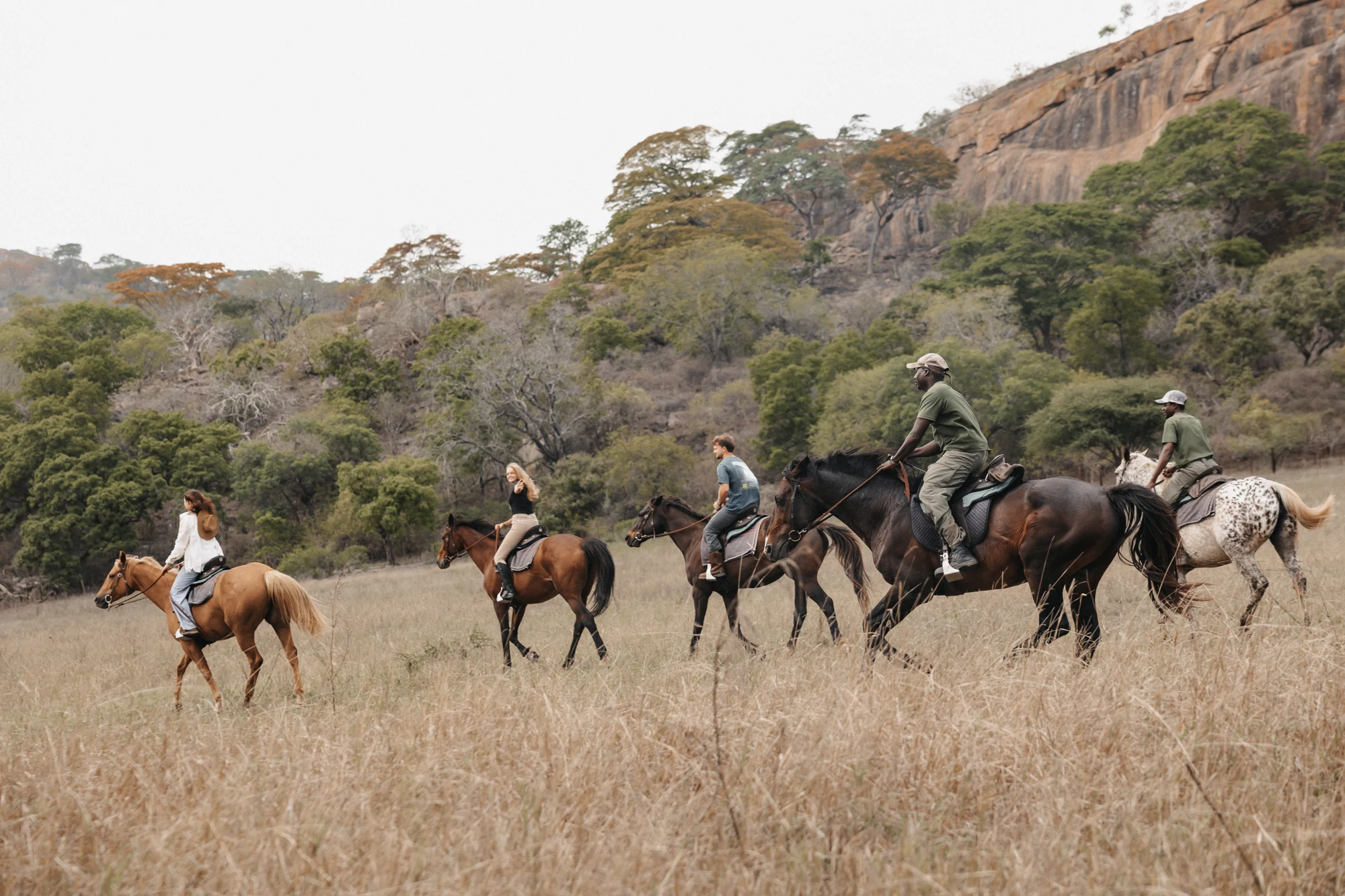
Other riding holidays are specifically designed for beginners or mixed abilities, with calm horses, shorter riding times, experienced guides and routes that can be adapted to the group, so the important thing is not whether you are a beginner but whether the experience you choose is genuinely suitable for your level.
If you are unsure where you fit, our guide to choosing the right horseback riding experience for your ability will help you understand the differences between beginner, intermediate and advanced experiences before you book.
It is also worth asking the right questions before committing to a ride, particularly about pace, duration, terrain, group size, horse selection and how strictly riding levels are assessed. We have collected those in our 50 questions to ask before booking a horseback riding experience.
Always read the riding requirements carefully and be completely honest about your experience, because calling yourself intermediate when you are still learning the basics does not make the trip more adventurous, it simply makes it less safe for you, the horse and the people riding with you.
If traveling on horseback is one of the reasons you want to learn, it can also be a wonderful long-term goal, because your first lesson might happen in an arena close to home while what you learn there eventually takes you through landscapes you could never experience in quite the same way from a car.
Icelandic valleys, Mediterranean beaches, African wilderness, desert trails and mountain paths all look rather different between two ears.
The benefit of having a hobby you are not immediately good at
Perhaps one of the most underrated reasons to start riding later is that adulthood tends to push us towards the things we are already competent at, because our careers are built around skills we have accumulated for years, our routines become familiar and we quietly eliminate many of the situations in which we might look completely clueless.
Then you sit on a horse and suddenly someone is explaining where your heels should be while your hands are doing something entirely different, your legs have apparently stopped accepting instructions from your brain, and a horse who has taught approximately 400 beginners before you knows exactly how little authority you currently possess.
It is humbling, occasionally ridiculous and, perhaps for exactly that reason, incredibly good for you, because you get to be a beginner again without attaching your progress to money, career success or anyone else’s expectations.
Learning something genuinely new reminds you that your identity is still expandable, and there is something deeply satisfying about celebrating something as small as finally understanding a movement that seemed impossible three lessons earlier.
Maybe you did not miss your chance to become a horse girl
Perhaps you imagined horses would be part of your childhood and they were not, perhaps you rode when you were young and life pulled you away from them, or perhaps you never thought of yourself as a horse person at all until adulthood, when something about them suddenly made sense.
There is no rule saying the important passions of your life have to reveal themselves early, and there is certainly no rule saying that starting later makes them less meaningful.
Your horse years might begin at eight, they might begin at 38, or they might begin with a nervous first lesson at a local stable, a quiet trail ride on holiday or the first time you realize that what you thought was a childhood dream is actually something you are still allowed to want.
You did not necessarily arrive late, and what once seemed like a missed opportunity might simply be something you are ready to make room for now.
Frequently Asked Questions About Starting Horse Riding as an Adult
Is 30 too old to start horse riding?
No, thirty is absolutely not too old to learn horse riding, and adult beginners can learn the fundamentals at any age provided their individual health and mobility allow it and they learn with an appropriate instructor and suitable horse. Your progress will depend much more on lesson frequency, instruction, confidence and individual ability than on whether you started at eight or thirty.
Is 40 too old to start horse riding?
No, many people ride recreationally well beyond their forties, and research across different rider age groups suggests that older participants can perceive substantial physical, psychosocial and relaxation-related benefits from riding. Starting at forty simply means learning according to your current body, confidence and goals rather than comparing yourself with somebody who has ridden since childhood.
Can you start horse riding at 50 or 60?
Potentially, yes, because age alone does not automatically prevent someone from learning to ride, although physical condition, balance, mobility, previous injuries and individual health circumstances naturally become important considerations. If you have relevant medical concerns, speak with a healthcare professional and choose a riding school experienced in teaching older beginners.
Is horse riding difficult to learn as an adult?
Horse riding has a real learning curve because you are developing balance, coordination and communication while working with another living being, and although adults may sometimes be more cautious than children, they can also bring patience, concentration, body awareness and a clearer understanding of how they learn. You do not need to learn quickly for riding to be worthwhile.
How long does it take to learn to ride a horse?
There is no universal timeline, because most beginners can learn basic control at walk and begin developing their trot relatively early, while becoming an independent, balanced and confident rider takes consistent practice over time. Riding once a week will produce a different progression from riding several times a week, and moving slowly is not a sign that you are doing badly.
Do I need to be fit before I start horse riding?
You do not need to be extremely fit to take a beginner lesson, although riding requires more physical effort than it may appear to from the ground, particularly as balance, core stability, coordination and muscular endurance become increasingly important as you progress. For a more detailed explanation, read our guide to how fit you need to be for horse riding.
Am I too heavy to ride a horse?
There is no single universal weight limit for horse riding, because riding facilities normally set their own limits according to the size and build of their horses, the tack being used, the terrain, duration and type of experience. Always check directly with the stable or tour provider and give your weight accurately, because these limits exist for horse welfare and rider safety.
If this is something you are concerned about, our guide to horseback riding weight limits explains why limits vary and what riders should know before booking.
What should I wear for my first horse riding lesson?
Wear comfortable long trousers and suitable riding footwear with a small heel and a smooth sole, secure clothing that could catch on equipment and confirm that a properly fitted riding helmet is available before you arrive. You can find the details in our guide to what to wear horseback riding.
Can I go on a horseback riding holiday if I am a beginner?
Yes, as long as the experience is genuinely suitable for beginners and provides appropriate horses, experienced guides, manageable riding durations and clear ability requirements. Never book an experienced-rider itinerary hoping you will simply manage once you arrive, because a well-matched beginner riding holiday will be safer, more enjoyable and far more likely to leave you wanting to ride again.
Is it worth starting horse riding later in life?
If horses are something you have wanted to explore, then yes, because you do not need years of childhood experience, competition ambitions or plans to own a horse for riding to have value. It can be physical activity, time outdoors, a way of traveling, a challenge, a social activity or simply something in your life that exists because you love doing it.
And that is reason enough.
(1).jpg)