What Children Can Learn From Being Around Horses

What Children Can Learn From Being Around Horses
There are easier childhood hobbies than those involving muddy boots, early mornings, hay somehow finding its way into the car, or a child explaining with complete seriousness why going to the stable is considerably more urgent than whatever you had planned for Saturday. Growing up around horses, however, can give children something that is difficult to recreate elsewhere.
A horse is another living being, with needs, moods, boundaries and a personality of its own, whose place in a child’s life extends beyond the end of a lesson. Learning to ride can therefore become about far more than learning how to sit in a saddle.
Research into horseback riding among typically developing children is still relatively limited, so we should be careful about claiming that horses automatically produce particular developmental outcomes. A 2025 scoping review found promising evidence across areas including social competence and aspects of cognitive, behavioral and emotional development, while also emphasizing the limited evidence base.
Some of the lessons horses offer, however, are much easier to see in everyday life.
1. Responsibility becomes real
When a horse is depending on you, it still needs water when you would rather sleep in, tack still needs putting away, and grooming cannot simply be abandoned halfway through because something more interesting appeared.
For children who are involved in the everyday care of horses, responsibility becomes something tangible, with consequences both for paying attention and for overlooking what needs to be done.
That does not mean a six-year-old should suddenly be responsible for managing a horse alone, since responsibilities need to be appropriate for the child's age and always supervised where necessary.
Even small rituals matter, whether that means carrying a grooming brush back to its place, helping prepare feed, checking water or learning that the horse's needs come before rushing off to the next thing. Over time, these repeated acts can make care feel more like a habit than an instruction.
For a younger child, a useful responsibility might be putting brushes away while an adult manages the horse, while an older or more experienced child might help groom under close instruction or learn to record what has been checked. These are examples to discuss with the instructor, not age-based permissions: maturity, the individual horse, the setting and competent supervision matter more than a birthday.
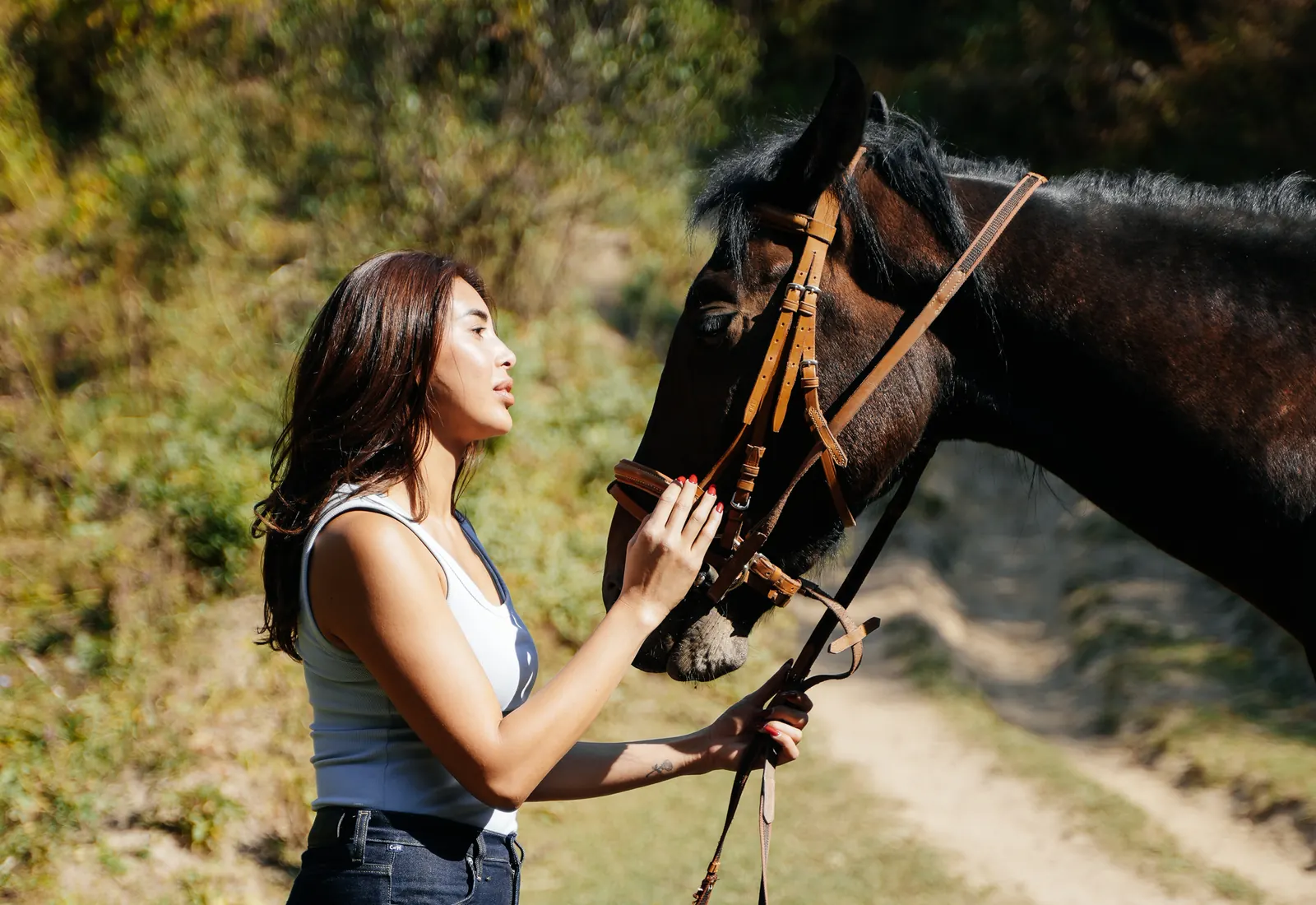
Respecting a boundary can be equally concrete, such as noticing that a horse turns away and asking the instructor what to do instead of pursuing a cuddle or offering food. Feeding, leading, lifting feet and entering a stall need the team’s explicit guidance, and a child should be allowed to watch when they do not feel ready to take part.
2. Progress teaches patience
Horse riding is very good at destroying the idea that being good at something should happen immediately.
You can understand what your instructor is asking and still not quite be able to make your body do it, until one day it works and the next week, inexplicably, it doesn't.
As children listen, practice, make mistakes, adjust and try again, they discover that progress is rarely perfectly linear and that frustration does not necessarily mean failure.
Perhaps more importantly, the horse cannot simply be rushed because the rider is impatient, since trust, balance and communication all take time to develop. That makes riding an unusual kind of education in a world where so much else is designed to happen immediately.
3. Confidence can grow quietly
There is a particular kind of confidence involved in learning to communicate with an animal considerably larger than you are.
That confidence may grow through a supervised task the child is ready to attempt, whether it is identifying a grooming brush, finding a balanced position or taking part in a first led ride. After a fall or frightening moment, a child needs appropriate assessment and support, rather than an expectation that courage means getting straight back into the saddle.
Each small step gives a child another piece of evidence that something that once felt intimidating can eventually become familiar.
The 2025 review of horseback riding in typically developing children found some evidence relating to social, behavioral, emotional and cognitive development, although the authors stressed that relatively few studies met their criteria and stronger research is still needed.
In other words, there are interesting findings, but “horse riding makes children confident” would be a stronger scientific claim than the current research allows us to make.
What we can see is the experience itself: children repeatedly encountering things they cannot yet do and gradually learning that they can.
4. Horses teach children to communicate without words
A horse cannot tell you, “I don't understand what you're asking,” or “I'm nervous today.” Children around horses therefore learn to look for what the animal may be communicating without words.
Where are the ears? Is the body relaxed? Is the horse moving away? Is it paying attention? Does something feel different today?
They begin learning that communication requires noticing what is coming back as well as considering what they want another living being to do, creating an interesting introduction to empathy and boundaries.
A horse can be tired, distracted, curious or uncertain, and may feel comfortable with one situation while finding another uncomfortable. Learning to notice those signals can encourage a child to think beyond their own immediate perspective.
Good horsemanship should reinforce an important distinction: connection with a horse depends on learning to communicate clearly while respecting the animal in front of you, rather than trying to dominate it.
That principle is also central to how we think about horse welfare at Saddle Stories. A beautiful ride is never enough on its own; how horses are handled and cared for matters too.
5. Riding gets childhood outside
A riding lesson is also physical activity, with riders continually adjusting their balance and posture in response to the horse's movement while coordinating their hands, legs and body. The 2025 review notes that riding involves balance, gross and fine motor coordination and body awareness.
Perhaps one of the simplest benefits is also one of the nicest: childhood happens outside, with weather, seasons, animals, mud, movement and a world that does not exist through a screen. Not every moment needs to be optimized into a developmental benefit, and sometimes spending Saturday afternoon outside brushing a pony is valuable simply because that is how the afternoon was spent.
For anyone wondering how physically demanding riding actually is, our guide to how fit you need to be for horse riding explains why riding involves considerably more balance, coordination and muscular endurance than it may appear to from the ground.
6. What about the “farm effect”?
This is one of the most interesting areas of research, but also one where the wording matters.
Studies have repeatedly found lower rates of allergic sensitization, asthma and certain allergic diseases among children raised in traditional farming environments. Research has investigated factors including early contact with livestock, animal fodder, environmental microbial diversity and other aspects of farm life.
A systematic review examining early farm exposure and childhood atopy found fairly consistent evidence of an association between early farm-related exposures and a lower risk of allergic sensitization at school age.
Researchers believe exposure to a diverse microbial environment may be one important part of the explanation, although the mechanisms are complex and farm life involves many exposures at once.
This does not mean that taking weekly horse riding lessons prevents allergies. The research concerns particular farming environments and early-life exposures, and it cannot simply be translated into “horses improve children's immune systems.”
So perhaps the scientifically accurate version of “a little dirt isn't necessarily a bad thing” is this: growing up in certain traditional farm environments has been associated with interesting differences in allergy risk, and scientists are still working to understand exactly which exposures are responsible.
7. Horses can become part of the family story
Then there is the part that research cannot neatly put into a graph: morning rides with Mum, learning from Dad, the drive to the stable every Saturday, and the first pony, canter or fall. A first rosette might be treated as though it were an Olympic medal, while the name of a particular horse can stay with everyone in the family twenty years later.
Not every child who takes riding lessons will spend their life with horses, whether they ride for a few months or a few years, or stop as teenagers and unexpectedly find their way back to horses at 35.
Julia began riding at 35 after a long-held wish, and our article about starting horse riding as an adult explores why an interest in horses does not have to begin in childhood to deserve a place in your life.
Childhood experiences do not have to become lifelong hobbies to matter, because sometimes their value lies simply in the memories they leave behind.
Is horse riding good for children?
Horse riding can give children opportunities to be physically active, spend time outdoors, learn practical responsibility, practice patience and build a relationship with another living being.
Scientific research into developmental benefits for typically developing children is promising but still limited, and it would be misleading to suggest that riding guarantees particular psychological or developmental outcomes.
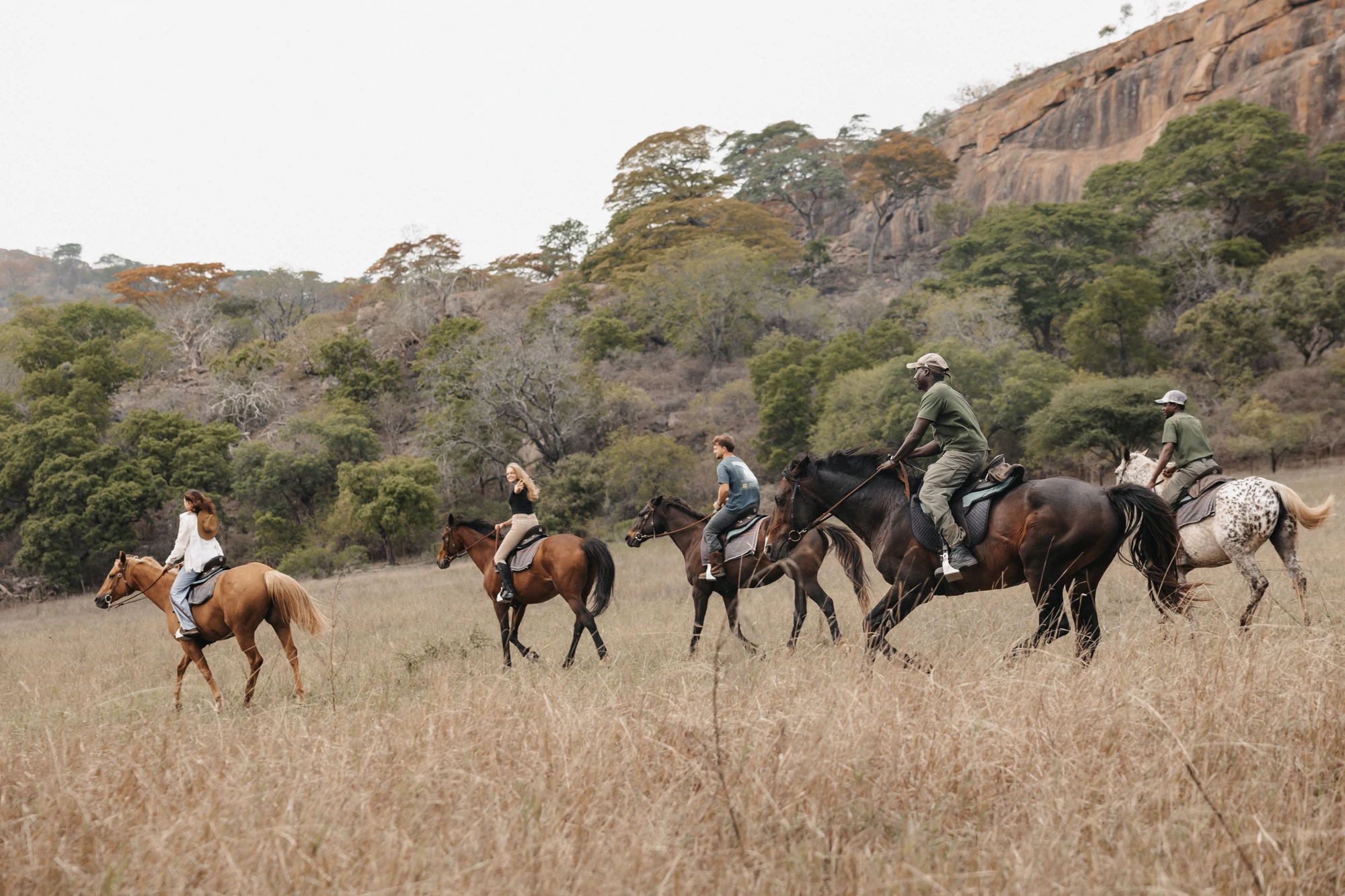
The quality of the experience matters too, which is why children should ride with appropriately trained supervision, suitable horses, correctly fitted safety equipment and an environment that takes both rider safety and horse welfare seriously.
If your child has never ridden before, our complete beginner's guide to horseback riding explains what to expect from a first ride, from choosing an appropriate experience to basic clothing and safety.
And before booking a particular stable or experience, our guide to 50 questions to ask before booking a horseback riding tour includes questions about minimum ages, helmets, beginner suitability, horse matching and welfare.
The lessons that stay with us
There are easier hobbies, but perhaps easy was never really the point when horses ask children to pay attention to something outside themselves. They require patience when progress is slow, care when it would be easier to walk away, and respect for a living being that has its own needs and boundaries.
Somewhere between the muddy boots, early mornings, first trots and weekends at the stable, families collect stories that become part of their shared history. Alongside the skills a hobby can offer children, there are memories for the whole family.
Want to experience horses together?
Saddle Stories curates horse-centered escapes and horseback experiences for different ages and riding levels, including private and multi-generational journeys designed around families.
As you begin planning time with horses as a family, our questions to ask before booking a riding tour can help you work through the practical details.
What are the benefits of horse riding for children?
Horse riding can provide opportunities for physical activity, balance and coordination, time outdoors, responsibility and interaction with animals, although research into broader developmental benefits for typically developing children is promising but currently limited.
What age can children start horse riding?
There is no universal minimum age, as riding schools set their own requirements based on their horses, facilities, insurance, type of activity and supervision, so parents should check the rules of the individual stable.
Can complete beginners go horse riding?
Many riding centers offer beginner experiences with suitable horses and instruction, although age requirements vary and the specific ride should always be checked before booking.
Does growing up around horses prevent allergies?
That has not been established, because research linking certain traditional farm environments and early-life farm exposures with lower rates of allergic sensitization does not establish that weekly riding lessons prevent allergies. Stable activities should be chosen around the child’s interests and needs, rather than a promised health effect.