What Loving Horses Might Say About You

What Loving Horses Might Say About You
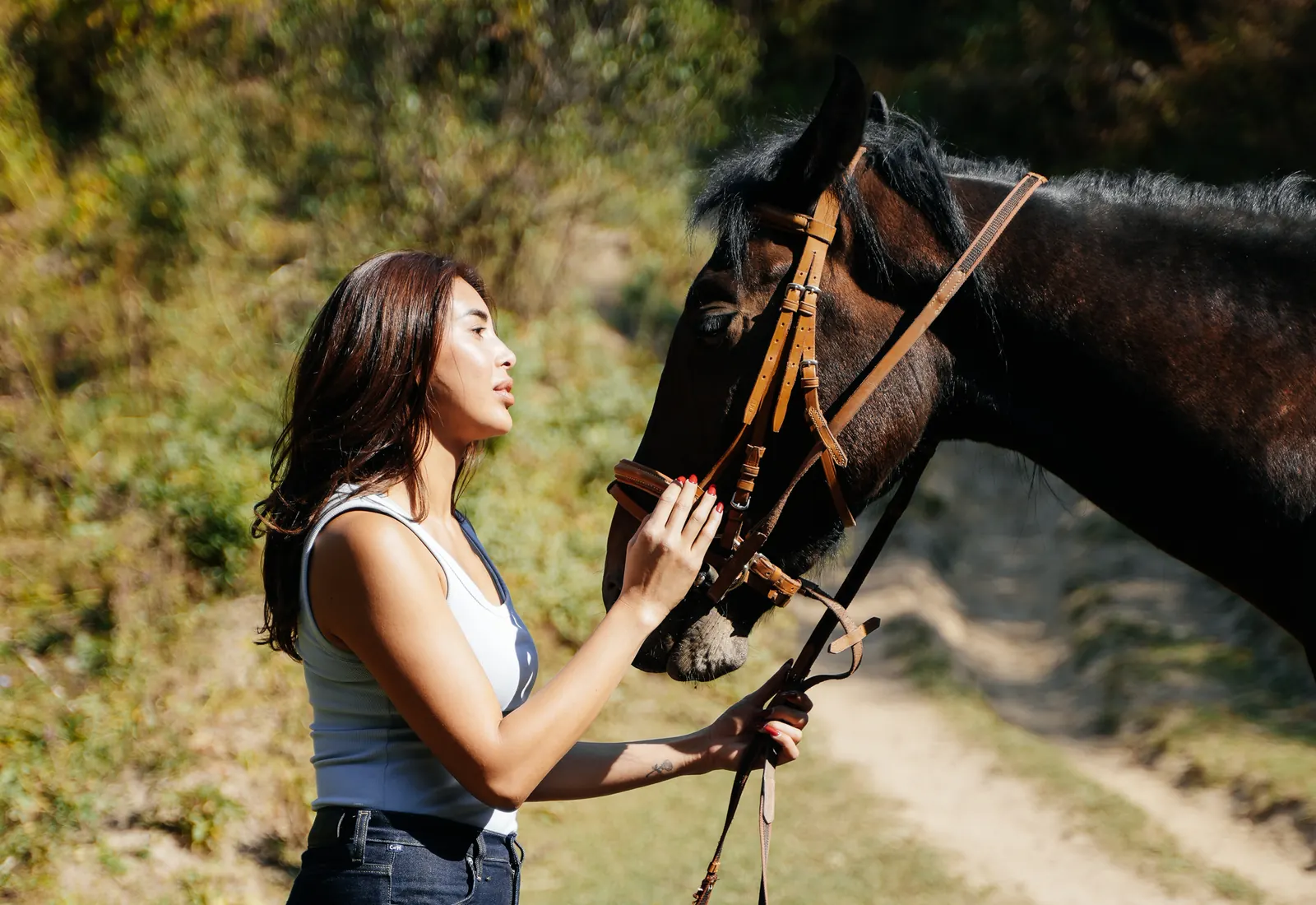
There is no single personality hidden behind a love of horses, since the person who enjoys a precise dressage exercise may want something quite different from the traveler happiest on a walking trail or the volunteer who would rather groom than ride. What interests me is the choice they share: spending time with an animal whose needs and reactions cannot be reduced to our own plans.
You can learn the technique, improve your balance, become more confident and spend years understanding increasingly subtle ways of communicating, but you are still working with another living being who might feel brave one day and nervous the next, notice something long before you do, or simply decide that whatever you had planned for that afternoon requires some renegotiation.
For some of us, that relationship becomes a place to practice patience when trust develops gradually and responsibility when a decision affects another living being, while others are drawn first by technique, competition, routine or the pleasure of being outside. None of those reasons makes somebody automatically kinder, braver or more emotionally perceptive than a person whose interests lie elsewhere.
Some days everything clicks and the communication feels almost effortless, while on others you find yourself wondering how something you understood perfectly well three days ago has suddenly become completely mysterious again.
And still, you come back.
You learn that confidence is not the same as control
There are plenty of things in life where becoming better means gaining more control, but horseback riding has a rather effective way of teaching you that real confidence often comes from becoming comfortable with the opposite.
Of course, experience matters, and over time you learn how to use your seat, legs and hands more effectively, how to communicate more clearly and how to respond when something does not go according to plan, but becoming a better rider does not mean turning a horse into something predictable.
A horse can hesitate at something you barely noticed, become alert because of something happening far away, react differently to a familiar trail because the weather has changed, or simply arrive with a slightly different mood from the one you expected, which means that confidence eventually becomes less about believing you know exactly what will happen and more about trusting yourself to respond when you do not.
That is a useful thing to learn far beyond the saddle.
Horses have very little interest in your preferred timeline
Trust with a horse is difficult to fake, because you cannot explain your intentions, reassure them with a carefully constructed argument or tell a nervous horse that there is objectively nothing to worry about and expect the matter to be settled.
Instead, trust develops through consistency, body language, timing, repetition and, perhaps most importantly, the way you behave when something becomes difficult, which means that progress does not always happen as quickly or as neatly as we would like.
We live in a world where almost everything encourages us to measure improvement, compare ourselves and expect visible results, while horses have absolutely no obligation to cooperate with whatever timeline we have created in our heads.
This can be particularly interesting when you start riding later in life, because adults often arrive with expectations about how quickly they should understand something, only to discover that riding does not care very much about how competent they are in the rest of their lives.
If you are beginning your own riding journey later in life, see our guide to starting horse riding as an adult.
You become surprisingly comfortable with being bad at something
Horseback riding is exceptionally good at keeping your ego under control, because you can leave one lesson convinced that something has finally clicked and return a few days later feeling as though nobody remembered to tell your body about this apparent breakthrough.
You lose your balance, misunderstand what the horse is telling you, give contradictory signals, get covered in dust and spend an unreasonable amount of time trying to perfect something another rider seems to do without thinking. Occasionally, you discover that the horse has understood the situation considerably faster than you have, and then you find yourself trying again.
There is something increasingly rare and valuable about voluntarily choosing an activity at which you will never really be finished, because even riders who have spent decades around horses continue learning, not only because there is always more technique to master, but because every horse brings a slightly different personality, history and way of communicating into the partnership.
Perhaps being a good rider has less to do with reaching a point where you know everything and much more to do with remaining curious enough to know that you never will.
Responsibility looks different when another living being is involved
The moment a horse becomes part of an experience, your decisions can no longer revolve entirely around what you want, because you also have to consider whether the horse is comfortable, physically capable, tired, nervous, confused or simply being asked for more than is reasonable.
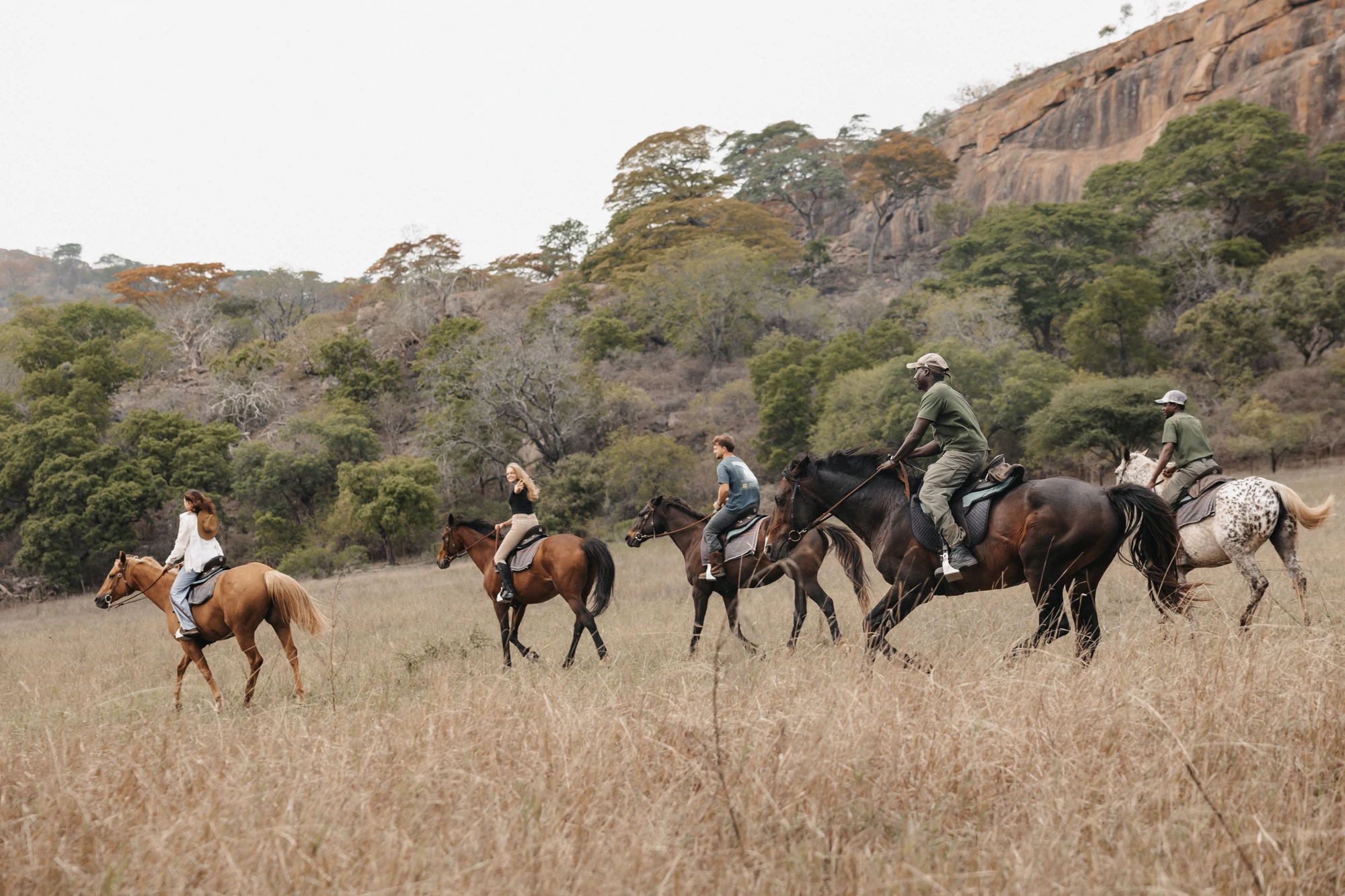
That responsibility becomes particularly important when traveling on horseback, where the spectacular part might be a canter across an open landscape, riding towards the ocean or seeing wildlife from the saddle, while the decisions that make those experiences possible are usually far less photogenic: matching horses and riders correctly, respecting terrain and weather, knowing when conditions are unsuitable and accepting that sometimes the right answer is simply no.
The horse is part of the experience itself, a living partner whose needs deserve consideration in every decision about the ride.
It is one of the reasons choosing the right ride matters so much, because the best experience is not necessarily the fastest, longest or most dramatic one, but the one that suits both horse and rider.
If you are planning your next ride, see our guide to choosing the right horseback experience.
Horses have a way of bringing you back to where you actually are
Perhaps one of the reasons so many people describe time around horses as grounding is that horses require enough of your attention to make disappearing entirely into your own thoughts surprisingly difficult.
You notice a change in rhythm underneath you, an ear turning towards something in the distance, the horse becoming slightly more alert or relaxing again beneath your seat, and suddenly whatever you were thinking about five minutes earlier feels considerably less urgent.
There is the horse underneath you, the landscape around you and whatever lies ahead on the trail.
This is also what makes traveling on horseback feel so different from simply visiting a destination, because instead of watching the landscape through a window, stepping out for a photograph and continuing to the next place, you move through it slowly enough to notice the distance between places, the changing ground beneath the horse’s feet, the temperature of the air and all the small details that would be remarkably easy to miss from a car.
You are not simply looking at the landscape anymore; for a little while, you are moving through it at the pace of another living being, which is perhaps why certain rides stay in our memories long after many of the places we have merely visited begin to blur together.
For more on why these experiences can leave such a lasting impression, read our article on why horseback travel stays with you longer.
There is also something about this kind of attention that explains why people often describe being around horses as calming even when riding itself requires concentration, and if you are interested in that side of our relationship with horses, see our article on why horses calm the human nervous system.
Perhaps the fact that we keep coming back says the most
People fall in love with horses for hundreds of different reasons, whether they are drawn to competition, the quiet routine of the stable, the freedom of a canter across an open landscape, the relationship with one particular horse or simply the rare experience of spending an hour in which the rest of life becomes a little quieter.
Those differences matter, because returning to horses can mean returning to a sporting challenge, a familiar stable routine, a social circle or one particular animal, without revealing a fixed set of character traits. The useful question may be which part of that relationship keeps drawing you back, and whether the way you take part gives the horse as much consideration as your own ambitions.
Maybe that is part of what draws us to horses in the first place, because they ask us to be present, to pay attention, to keep learning and to build trust rather than demanding it, while reminding us again and again that becoming more experienced does not mean becoming completely in control.
Perhaps the willingness to keep learning is what you recognize in your own attachment to horses, or perhaps your answer is simpler and more personal than any general theory about riders could capture. Either way, the horse in front of you deserves to be understood as an individual, just as you do.