15 Places Worth Traveling to for the Horses Alone
15 Places Worth Traveling to for the Horses Alone
If you travel to Iceland for a horse’s particular gait, to Patagonia for time on an estancia or to the Okavango for an experienced-rider safari, you are making three quite different choices before you ever compare the scenery. This guide begins with what makes the riding distinctive, then considers the experience, time and practical questions each destination deserves.
A country name is not a riding-level assessment, and a gentle local outing can exist near a demanding expedition without making the two suitable for the same traveler. Use the notes below to build a shortlist, then ask for the requirements of the exact route before making travel arrangements.
The world is full of remarkable places to ride, and each traveler will have a different idea of what makes a destination special, from open beaches and remote mountain trails to luxury stays, wildlife encounters or several days crossing the wilderness.
This selection considers scenery, riding culture, the uniqueness of each experience and the opportunity to discover a destination in a way that would be difficult without a horse.
1. Patagonia, Argentina and Chile
Stretching across southern Argentina and Chile, Patagonia combines enormous grasslands, mountain ranges, glacial lakes, forests and working estancias on a scale that can feel difficult to grasp until you cross part of it on horseback. Depending on the route, riders can explore the Patagonian steppe, travel beneath the Andes or ride through traditional ranch country with local gauchos.
Riding feels closely connected to the landscape here, especially in remote areas where horses have long been part of everyday ranch life and movement across the land.
Some experiences last a few hours, while others involve several days in the saddle with nights spent at estancias or remote camps.
Best for: dramatic scenery, gaucho culture, experienced riders and multi-day journeys
Planning notes: Choose between a shorter estancia outing and an itinerary with consecutive long riding days; ask about the paces, camping or room arrangements, and the distance between overnight stops. For timing, check the specific southern region and route rather than treating all of Patagonia as one season, especially where mountain access affects the program.
2. Kyrgyzstan
Kyrgyzstan is one of the most exciting horseback travel destinations in the world, especially for anyone drawn to mountains and nomadic culture.
Riders can cross alpine meadows, climb mountain passes and stay overnight in yurts beside high-altitude lakes. Son-Köl is one of the country’s most recognised riding areas, with journeys often combining several hours in the saddle each day with time spent among local herding communities.
The experience is usually simple rather than polished, which is part of its appeal when traveling through a landscape where horses remain closely connected to local life and tradition.
Best for: mountain riding, cultural immersion, yurt stays and adventurous travelers
Planning notes: A yurt-based journey and a short valley ride can ask very different things of a new rider, so establish daily saddle hours, steep sections and whether you must dismount and walk. Confirm when the actual mountain passes and camps operate, along with altitude, transfer time and what happens if weather closes the planned route.
3. Mongolia
Mongolia’s deep relationship with horses is reflected in journeys across the open steppe, grasslands, mountains, forests and the edges of the Gobi Desert, with nights spent in tents or traditional gers.
Horses remain closely tied to herding, transport, sport and national identity in Mongolia, where they outnumber people, giving some sense of how central they are to everyday life.
A riding journey here can feel wonderfully removed from modern life, passing through areas with no roads or fences and very few signs of permanent settlement.
Best for: wilderness, nomadic culture, long-distance riding and complete disconnection
Planning notes: A longer steppe journey rewards preparation for repeated days in the saddle, but the program must spell out the riding standard rather than assume enthusiasm is enough. Ask about saddle style, horse matching, toilets and washing facilities, overnight arrangements and the departure season for your specific region.
4. The Okavango Delta, Botswana
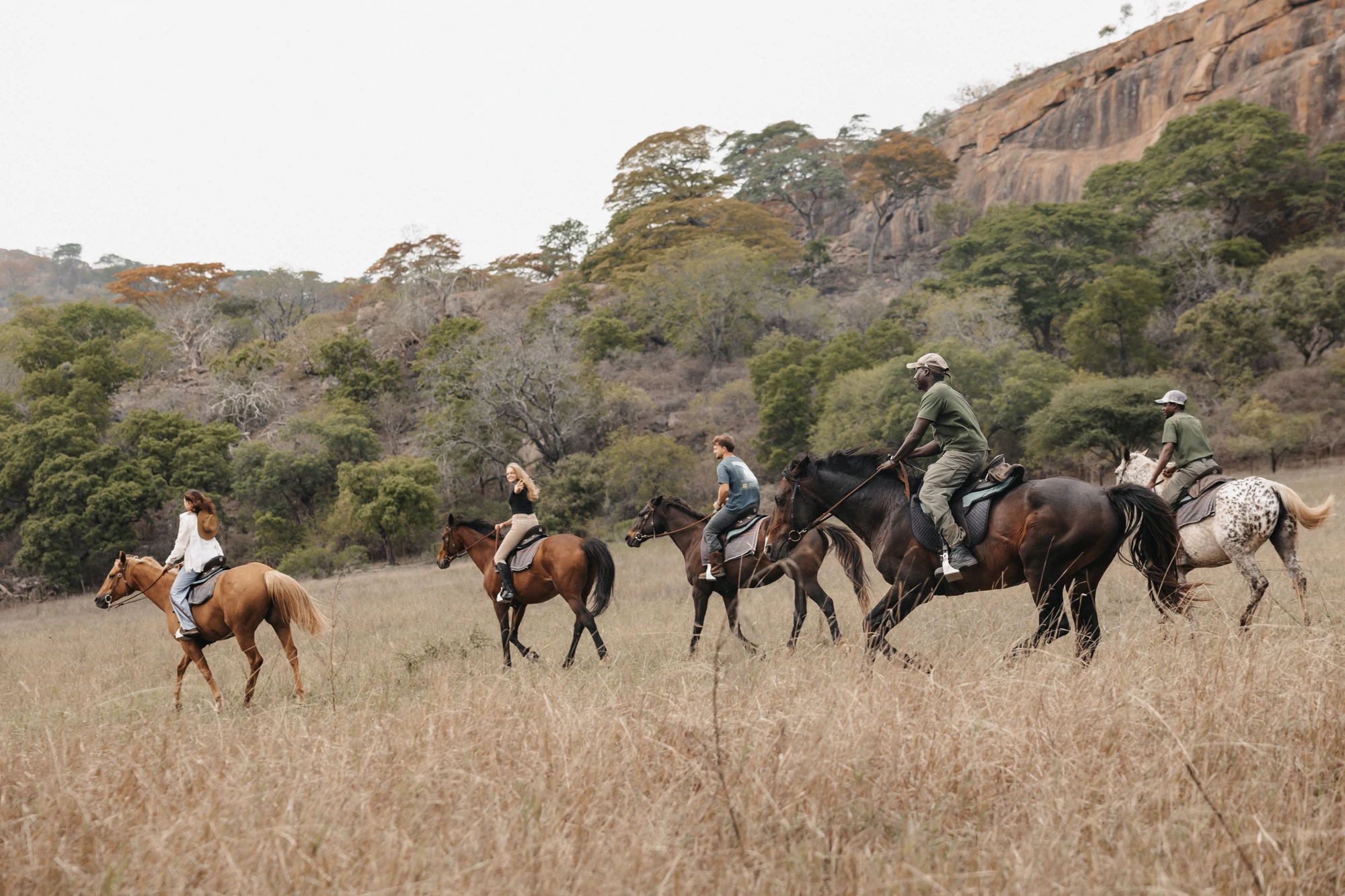
A horseback safari in Botswana’s Okavango Delta offers an unusual way to explore a landscape formed by waterways, floodplains, islands and woodland filled with wildlife. From horseback, experienced riders may encounter zebra, giraffes, elephants and other animals without the noise of a safari vehicle.
Because the area is unfenced and encounters with wildlife must be managed carefully, many operators require confidence at faster paces, making this generally unsuitable for beginners.
For capable riders, however, it offers a rare combination of luxury, wilderness and genuine adventure.
Best for: experienced riders, wildlife, luxury adventure and horseback safaris
Planning notes: Start with the operator’s assessment of independent riding and faster paces, then ask about daily hours, wildlife procedures and the length of the stay. Flood levels and seasonal conditions affect how a delta itinerary works, so have the camp explain what the departure month means for the route rather than buying a particular wildlife or water photograph.
5. Iceland
Iceland’s distinctive riding experiences are closely tied to the Icelandic horse, a small, strong breed adapted to the country’s changing weather and difficult terrain, and known for the tölt, a smooth four-beat gait that many riders travel specifically to experience.
Routes can cross lava fields, valleys, rivers, mountains and black sand landscapes. Some rides last only an hour, while longer riding holidays travel between farms and through remote parts of the country.
Even a short ride can provide a completely different way to experience Iceland’s volcanic scenery.
Best for: unusual landscapes, distinctive horses, beginners and riding holidays
Planning notes: Separate a short introductory ride from a long journey with repeated riding days, and ask whether the planned pace includes tölt and what instruction is provided. FEIF describes tölt as an even four-beat gait, although a breed’s abilities do not guarantee that every guest or horse will use it on every ride; departure season and weather still need checking for the chosen route.
6. The Scottish Highlands and Coast
Scotland offers more riding variety than many travelers realize, with routes through forests, open moorland, rolling countryside and wide beaches, often with mountains or historic estates in the distance. In the Highlands, the changing weather and soft light make the landscape feel particularly atmospheric.
With both shorter scenic rides and longer trail-riding holidays available, Scotland can be a strong choice for travelers who want a beautiful riding experience without committing to an extreme expedition.
Best for: beaches, moorland, dramatic weather, solo travelers and European escapes
Planning notes: Look at the actual outing rather than using “Highlands” as a difficulty label, with short led or introductory formats distinct from longer independent trails. Ask how wind, weather and daylight affect the date you want, and confirm beach access and riding time rather than assuming a coastal itinerary stays on sand.
7. The Camargue, France
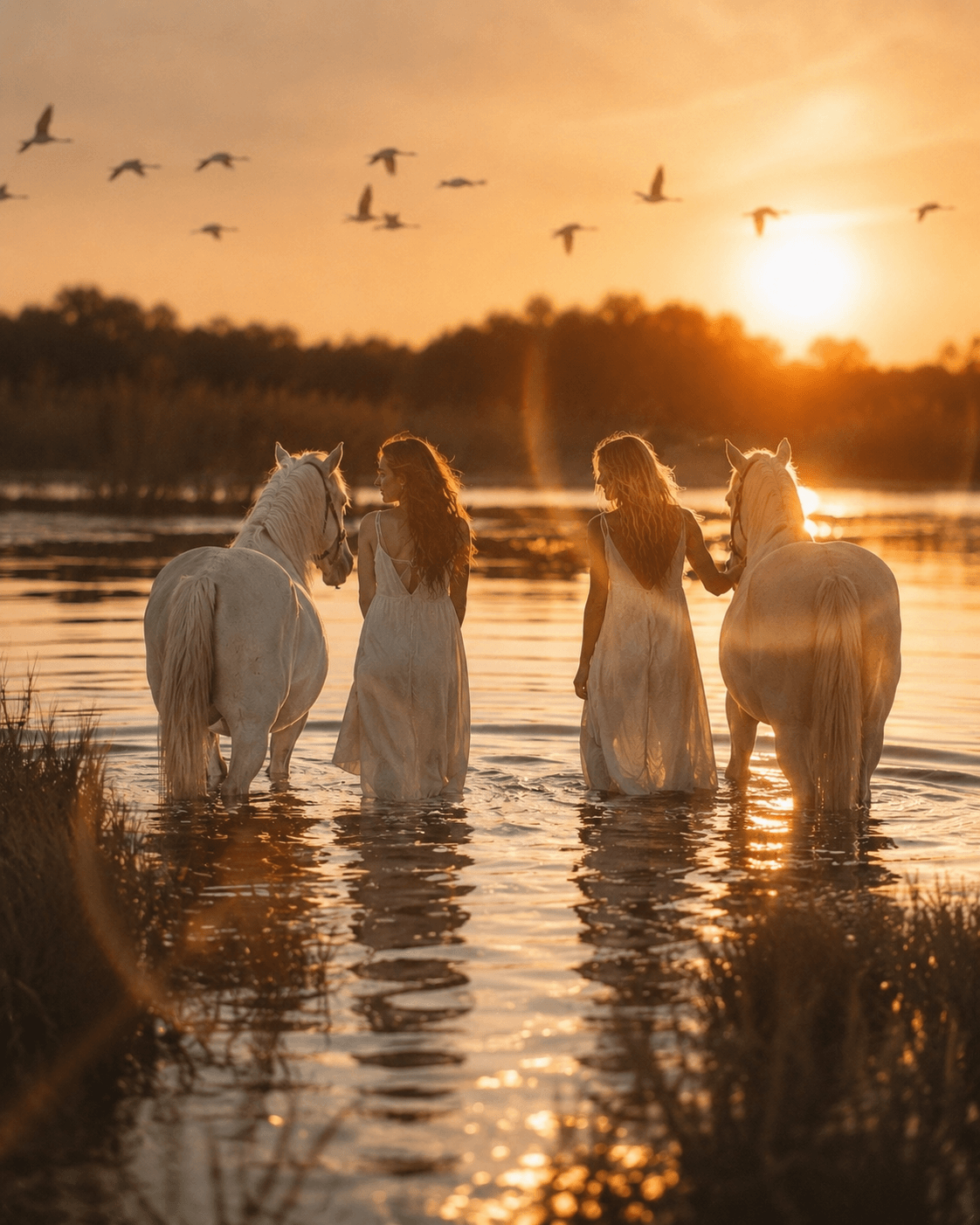
The Camargue in southern France is famous for its small white horses, wetland landscapes, black bulls and pink flamingos, with horses playing a longstanding role in managing livestock across the marshes alongside the traditional riders known as gardians.
Riding through the Camargue can include reed-filled wetlands, open countryside, lagoons and, depending on the route and season, coastal landscapes.
It is one of Europe’s most visually distinctive horseback riding destinations and can also be suitable for complete beginners when the route is chosen carefully.
Best for: wildlife, wetlands, beginners, couples and short riding experiences
Planning notes: A walking introduction can suit a new rider when the provider confirms it, while faster or longer routes need a separate discussion. Check the balance between marsh trails and coast, the time you will actually be mounted and how heat, weather and local access affect departure times and the route.
8. Andalusia, Spain
Andalusia combines one of Europe’s strongest equestrian traditions with beautiful countryside and a deeply rooted regional culture.
Riding experiences can take travelers through olive groves, mountain valleys, white villages, open plains and areas close to the coast. The region is closely associated with the Andalusian horse and classical Spanish horsemanship.
Trips may also include traditional food, flamenco, visits to breeding farms or time in historic cities such as Seville and Jerez.
Spain’s official tourism information highlights the country’s long horse-riding tradition and the wide range of landscapes available for equestrian travel.
Best for: equestrian culture, food, luxury stays and countryside riding
Planning notes: Decide whether your priority is a lesson-based stay, a gentle countryside trail or a longer riding holiday, because each needs its own ability assessment. Confirm whether sightseeing, meals and accommodation are part of the booking, and ask how hot conditions change the daily timetable in your travel month.
9. The American West
Wyoming, Montana, Utah and neighbouring regions offer the working ranches, mountain trails, desert canyons and vast, sparsely developed landscapes that have made the American West so closely associated with horseback riding.
Travelers can choose between short trail rides, luxury ranch stays, cattle drives and longer wilderness journeys. Utah is especially dramatic for red rock and desert scenery, while Wyoming and Montana offer the classic mountain and ranch experience.
This is one of the best regions for anyone who has ever dreamed of experiencing a small part of cowboy life.
Best for: ranch stays, mountain scenery, families and classic trail riding
Planning notes: A ranch offering lessons and short rides is a different choice from a cattle drive or a point-to-point wilderness trip, so compare daily hours and the amount of independent control expected. Ranch and trail operating seasons differ across this large region; ask about your exact property, elevation and departure rather than applying one calendar to the West.
10. Namibia
Namibia’s open plains, rugged mountains, dry riverbeds and enormous skies create a distinctive setting for multi-day rides through some of the most remote terrain in southern Africa.
The conditions can be demanding, and longer desert rides are usually better suited to confident riders. In return, the experience offers extraordinary solitude and the feeling of crossing a landscape largely untouched by modern development.
Best for: desert expeditions, experienced riders, remote landscapes and photography
Planning notes: Treat a long desert crossing as an experienced-rider trip unless the exact program states otherwise, and ask about sustained pace, daily distances and recovery between riding days. Have the operator explain the season for the chosen route, the practicalities of remote camps and what support exists if a rider cannot continue.
11. Morocco
Morocco’s variety of riding landscapes allows travelers to explore the Atlas Mountains, Atlantic beaches, dry countryside or areas near the edges of the Sahara. Some routes pass traditional villages and provide opportunities to learn more about Berber and rural Moroccan culture.
It is also a practical winter destination for European travelers looking for warmer weather.
Best for: mountain trails, beach rides, cultural travel and winter escapes
Planning notes: A coastal outing, an Atlas trail and a desert itinerary should be compared separately for pace, terrain and time mounted. Request route-specific seasonal advice, since beach weather does not describe conditions at altitude, and clarify accommodation, language support and the time spent transferring between places.
12. New Zealand’s South Island
New Zealand’s South Island combines alpine landscapes, lakes, high-country farms, forests and wild coastal scenery.
Horseback journeys may pass through working stations, mountain valleys or open countryside with views that feel almost cinematic. The scale of the landscape makes it especially well suited to longer rides.
The destination works well for travelers who want wilderness and comfort without necessarily choosing an extremely remote expedition.
Best for: mountains, high-country riding, scenery and multi-day holidays
Planning notes: A short farm ride and a longer high-country trek need different levels of preparation, particularly where consecutive riding days or steep terrain are involved. Ask about the property’s operating season, changing mountain conditions, the format of overnight stops and whether the route offers a practical alternative if riding is curtailed.
13. Portugal
Portugal offers varied possibilities for horseback travel, from the cork forests, vineyards, traditional estates and open countryside of the Alentejo to beach and dune rides along the Atlantic coast.
Portugal is also closely associated with the Lusitano horse and has a strong tradition of classical riding. Many experiences combine time in the saddle with local wine, regional food and beautiful accommodation.
Best for: wine, beaches, luxury escapes, Lusitano horses and couples
Planning notes: Lesson-based stays, estate trails and coastal rides can serve different interests and levels, so choose the riding format before the accommodation photograph. Establish actual saddle time and whether the sea appears as a view or an accessible riding beach, then check heat, local access and seasonal schedules for the exact program.
14. The Andes of Peru and Ecuador
The Andes offer high-altitude riding through volcanoes, valleys, farmland and traditional communities.
In Peru and Ecuador, some routes begin at historic haciendas and travel through landscapes that would otherwise be difficult to access. Riders may pass beneath snow-covered peaks or through rural areas where horses remain part of everyday work.
The altitude and terrain can make longer rides physically demanding, but the cultural and geographical variety is exceptional.
Best for: mountains, culture, historic haciendas and adventurous travelers
Planning notes: Ask how the trip handles altitude, time to acclimatize, steep sections and any walking beside the horse, alongside the riding assessment itself. Duration and seasonal access depend on the chosen hacienda and mountain route, so request the day-by-day plan and local guidance before connecting it to flights and other travel.
15. Kenya
Kenya adds a second, very different kind of African horseback safari to this list.
Riding areas may include private conservancies, open grasslands and ranches where travelers can encounter wildlife such as giraffes and zebra. Some experiences combine riding with luxury camps, conservation projects and traditional safari activities.
As in Botswana, many wildlife rides are designed for capable riders because the environment is open and unpredictable.
Best for: wildlife, conservation, experienced riders and luxury safaris
Planning notes: A wildlife itinerary needs a clear account of independent control, faster paces and the guide’s procedures, rather than a broad country-level promise about suitability. Compare daily riding hours, camp moves and departure dates, asking how seasonal weather and local conditions shape the particular conservancy or ranch program.
How do you choose the right horseback riding destination?
Alongside the beauty of a destination, consider how its riding options match your experience, the time you want to spend in the saddle and the kind of journey you hope to enjoy.
What is your riding level?
A relaxed countryside ride in Scotland or the Camargue may be suitable for a complete beginner, while a fast horseback safari in Botswana or a long desert expedition in Namibia usually requires much more experience.
Giving an honest description of your ability helps the operator choose a suitable horse and route, supporting the welfare and safety of both you and the horse.
How much time do you want to spend riding?
The difference between a one-hour experience and a seven-day riding holiday is substantial, so think about how much time you would actually enjoy spending in the saddle.
Beginners often enjoy rides of one to two hours, while experienced riders may prefer a longer journey in destinations such as Mongolia, Patagonia or Kyrgyzstan.
Which landscape excites you most?
Choose the setting you genuinely want to experience:
- Beaches
- Mountains
- Deserts
- Forests
- Wetlands
- Wildlife reserves
- Vineyards
- Open countryside
The scenery is a large part of what makes horseback travel memorable.
Do you want adventure or comfort?
Some riding holidays involve camping, simple yurts and remote trails, while others combine time in the saddle with luxury lodges, spas, private transfers and carefully prepared meals.
The right choice depends on which combination of adventure and comfort you would most enjoy, as each offers a different way to experience the destination.
Is horse welfare taken seriously?
A beautiful destination cannot compensate for poor treatment of horses.
Look for operators that:
- Match horses carefully to riders
- Limit riding hours
- Adapt activities during extreme heat
- Use properly fitted equipment
- Provide rest, water and appropriate care
- Ask guests honestly about weight and experience
- Treat their horses calmly and respectfully
-
What is the best horseback riding destination for beginners?
There is no single best destination, but Iceland, Scotland, the Camargue, Portugal and parts of Andalusia can all offer beginner-friendly rides.
The individual operator and route matter more than the country itself, so always check whether the exact experience is suitable for complete beginners.
What is the best destination for experienced riders?
Experienced riders may be especially drawn to Patagonia, Mongolia, Kyrgyzstan, Namibia and horseback safaris in Botswana or Kenya, where some routes offer longer hours in the saddle, faster riding and more challenging terrain.
What is the best destination for beach horseback riding?
Scotland, Portugal, Morocco, Iceland and selected coastal areas in Spain offer beautiful beach-riding possibilities.
Beach access can depend on local regulations, tides, weather and the season, so never assume every coastal ride includes the beach.
What is the best destination for a multi-day riding holiday?
Patagonia, Mongolia, Kyrgyzstan, Namibia, Portugal, Scotland and New Zealand are all strong choices for longer riding journeys, with the best option depending on your experience, budget and preferred level of comfort.
Final thoughts
Some of the most unforgettable horseback destinations take time to reach, perhaps through a long drive, a mountain pass, a small village or several days away from familiar routines.
That distance can become part of the experience, giving us time to connect with landscapes, horses and local cultures in ways that are difficult to recreate when traveling quickly.
At Saddle Stories, we believe the journeys that stay with us bring those connections together, leaving us with a deeper sense of the place and the time we spent there.
Find your next horseback adventure
Discover carefully selected horseback riding experiences, private journeys and riding holidays around the world with Saddle Stories.
If you want to add a single outing to a broader vacation instead of choosing a whole trip around riding, our selection of ten places for a horseback outing takes that shorter-format approach. The distinction is useful when a country appeals to you but a long riding itinerary does not.